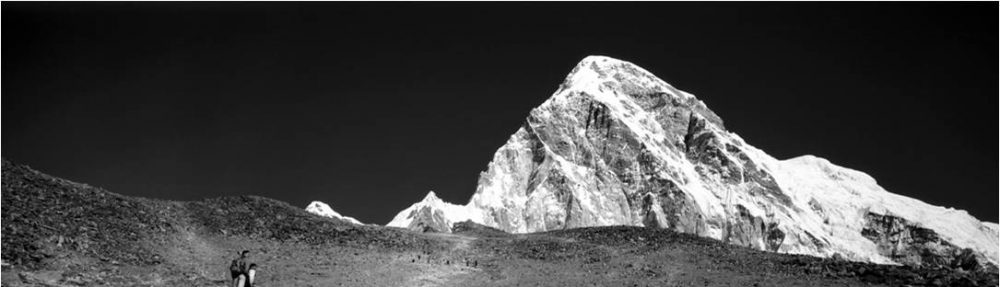

Recipient of fellowships and grants from The Rockefeller Foundation, Ireland Literature Exchange, Trubar Foundation, Slovenia, The Institute for the Translation of Hebrew Literature and The Foundation for the Production and Translation of Dutch Literature, Yuyutsu Ram Dass Sharma is a world renowned Himalayan poet and translator.
Yuyutsu Sharma is one of the few poets in the world who make their living with poetry. Named as “The world-renowned Himalayan poet,” (The Guardian) “One-Man Academy” (The Kathmandu Post) and “Himalayan Neruda” (Mike Graves), Yuyutsu is a vibrant force on the world poetry stage,
He has published ten poetry collections including, The Second Buddha Walk, A Blizzard in my Bones: New York Poems, Quaking Cantos: Nepal Earthquake Poems, Nepal Trilogy, Space Cake, Amsterdam and Annapurna Poems. Three books of his poetry, Poemes de l’ Himalayas (L’Harmattan, Paris), Poemas de Los Himalayas (Cosmopoeticia, Cordoba, Spain) and Jezero Fewa & Konj (Sodobnost International) have appeared in French, Spanish and Slovenian respectively. In addition, Eternal Snow: A Worldwide Anthology of One Hundred Twenty-Five Poetic Intersections with Himalayan Poet Yuyutsu RD Sharma has also appeared.
Widely traveled author, he has read his works at several prestigious places including Poetry Café, London, Seamus Heaney Center for Poetry, Belfast, New York University, New York, The Kring, Amsterdam, P.E.N, Paris, Knox College, Illinois, Whittier College, California, Baruch College, New York, WB Yeats’ Center, Sligo, Shi Shangzhuang, Hebei, China, Gustav Stressemann Institute, Bonn, Rubin Museum, New York, Cosmopoetica, Cordoba, Spain, Beijing International Book Fair, The Irish Writers’ Centre, Dublin, Columbia University, New York, Lu Xun Literary Institute, Beijing, The Guardian Newsroom, London, Trois Rivieres Poetry Festival, Quebec, Arnofini, Bristol, Borders, London, FIP, Buenos Aires, Slovenian Book Days, Ljubljana, Royal Society of Dramatic Arts, London, Gunter Grass House, Bremen, GTZ, Kathmandu, International Poetry Festival, Granada, Nicaragua, Nehru Center, London, Beijing Normal University, The Beijing Bookworm, Universidad Abierta Interamericana (UAI) / Indian Embassy, Buenos Aires, March Hare, Newfoundland, Canada, Gannon University, Erie, Frankfurt Book Fair, Frankfurt, Sahitya Academy, New Delhi, Indian International Center, New Delhi, and Villa Serbelloni, Italy.
Yuyutsu has held workshops in creative writing and translation at Queen’s University, Belfast, University of Ottawa and South Asian Institute, Heidelberg University, Germany, University of California, Davis, Sacramento State University, California, Beijing Open University, New York University, New York and Columbia University, New York.
His works have appeared in Poetry Review, Chanrdrabhaga, Sodobnost, Mudfish, Amsterdam Weekly, Indian Literature, Rattapallax, Irish Pages, Drunken Boat, Califragile, Delo, Modern Poetry in Translation, Exiled Ink, Iton77, Little Magazine, The Telegraph, Indian Express and Asiaweek.
The Library of Congress has nominated his book of Nepali translations entitled Roaring Recitals; Five Nepali Poets as Best Book of the Year 2001 from Asia under the Program, A World of Books International Perspectives.Yuyutsu’s own work has been translated into German, French, Italian, Slovenian, Hebrew, Spanish and Dutch. He has published his nonfiction, Annapurnas & Stains of Blood: Life, Travel and Writing a Page of Snow, (Nirala, 2010).
Yuyutsu was at the Poetry Parnassus Festival organized to celebrate London Olympics 2012 where he represented Nepal and India. In 2020, his work was showcased at Royal Kew Gardens in an Exhibit, “Travel the World at Kew.”
Half the year, he travels and reads all over the world and conducts Creative Writing workshops at various universities in North America and Europe but goes trekking in the Himalayas when back home.
Currently, Yuyutsu Sharma edits Pratik: A Quarterly Magazine of Contemporary Writing.
More : https://yuyutsurdsharma.blogspot.com/
Praise for Yuyutsu Sharma’s Earlier Work
“The world-renowned Himalayan poet”
—The Guardian
“Yuyutsu Sharma is one of the finest poets on planet earth.”
— Sean Thomas Dougherty, author, The Second O of Sorrow
Like “globes of light” along a narrow path through “blind night,” these syncopating couplets offer neither escape nor absolution, but something more tangible for “bleary-eyed wanderers”: company along the way.
—Charles Bernstein, author of Near/Miss and Pitch of Poetry & the winner of the 2019 Bollingen Prize for American Poetry
On page after page Yuyu takes my breath away with the unexpected and the new. He has an unwavering capacity to startle with the perfect image, with his attention to small, revelatory detail and his sly, understated humor, often directed at himself.
— Felicity Volk, Australian Novelist & the Ambassador to Nepal, author, Lightning and Desire Lines
‘Yuyutsu Sharma’s new collection is concerned with notions of home and being away in the exotic elsewhere. Home strikes deep, like ‘my grandma / asleep // on a plump / bubble // of a folk song’ but is then flung into the great proper nouns of New York, all detail, all observation and dazzle. The poems are registered at the tips of the eyes then connected with the sense of deep home. That is where the power lies. It emerges through ear and mouth as a kind of cosmopolitan love letter.’
—George Szirtes, British Poet, winner of Faber Memorial Prize & T.S. Eliot Prize
“One Man Academy.”
—Nagendra Sharma in The Kathmandu Post
‘Yuyutsu Sharma, a Himalayan poet who studied his craft in the United States and on the mule paths of high Himalayas has brought a visionary sensibility to his New York poems. They read like Federico Garcia Lorca having a Hindu dream, or like Allen Ginsberg risen from the dead and howling out a peyote vision for 2013. Their ambition, like Lorca’s in his Poet in New York or like Hart Crane’s in his New York epic, The Bridge, is to write an epic vision of the city–and ultimately of America–in linked lyrics. Here are the Twin Towers flaming like the red tongue of Kali, goddess of destruction, a city like a yellow-eyed demon, Hurricane Sandy burrowing into the island’s groin like a furious porcupine. Sharma is “a shaman…black bag bulging / from magical rainbows, / serpents from an Hindu Heaven, / skull of an abducted female Yeti,” and he casts spells in these strange, visionary, outrageous and magical poems.’
Tony Barnstone, The Albert Upton Professor and Chair of English, Whittier College, Author/Translator of Everyman’s Chinese Erotic Poems
I feel unable to praise Yuyutsu Sharma’s new collection adequately. I think of Whitman, Neruda, Lorca. Sharma is a fever and river, at moments a rhapsody and the gods sing through him even his workshop is messy. Yuyutsu Sharma should be known as The Himalayan Neruda not only for the torrents of images and compassion and outrage in his poetry but for the range of his subjects, themes and imagery. Reading him I feel as I do when reading Neruda that he could make first rate poetry out of anything, as he ranges like a vartic voice of the Himalayas through the natural beauties of Nepal and cities of the world.
—Mike Graves, American poet and teacher, City University of New York, author, A Prayer for the Less Violent Offenders:
If Langston Hughes, Federico García Lorca and Frank O’Hara were exhumed to rub their recollections of New York City together over dal and black tea, they might produce a manuscript as rapturous as Yuyutsu Sharma’s love letter to the five boroughs. Infused with the mythology of Sufi saints and Hindu deities, Blizzard Go Delhi is nonetheless utterly contemporary, juxtaposing Duane Reedes and Occupy Wall Streeters alongside Punjabi wheat fields and muscular Halwai-confectioners working over huge cauldrons of oil. Unrepentant in its sensuality, self-assured and visionary, Sharma’s book is an extravagant tour de force that shows us that stepping off the train into New York City is to enter a realm “of wandering winter spirits and wavering speeches…a bedlam vision of a bedroom utopia that tries very hard every night to find a partner of sleep.” Tries, but thankfully for us, fails and instead stays up to channel the manic, long-limbed energy of the city in this memorable and original verbal jazz solo. This book is a poetic triumph.
-Ravi Shankar, Executive Director of Drunken Boat, author of seven books/chapbooks of poetry & co-editor of W.W. Norton & Co.’s Language for a New Century: Contemporary Poetry from Asia, the Middle East & Beyond
“A Blizzard in My Bones,” Yuyu’s deeply moving new collection and a remarkable addition to modern urban literature. It is Nepal and Hinduism and Brooklyn and Manhattan and Greenwich Village drawn together in a new Space Cake: Amsterdam; but here the hallucinogen-stoked celebration is amid the concrete and steel heights of Metropolis.
David Austell, Professor, NYU, Author of Little Creek and Other Poems
Capacious and wild, offering itself energetically to contrasting continents and sensibilities, Sharma’s ambitious and honest New York collection offers a vivid tribute to Lorca, its presiding muse.
Annie Finch, winner of Robert Fitzgerald Award and author of Spells: New and Selected Poems.
The ‘blinding snows of the Annapurnas ridge’ inspire a poetry that confronts natural magnificence with exuberant humanity. Yuyutsu R D Sharma’s generous vision embraces not only the landscape and its people but the lesser fauna, like the pigeons that speak ‘a kind of hushed speech that robbers might use’ and the mules on the Tibetan salt route, exhausted and bow-legged from hauling ‘cartons of Iceberg, mineral water bottles,/ solar heaters, Chinese tiles, tin cans…’ These vividly coloured, muscular and energetic poems have an atmosphere of freshness, as though the snow itself had rinsed and brightened them. Like the ‘waterfall beds that/ smelled of the birth of fresh fish’, they have the tangy, dust-free odour of language born of lived experience.
Carol Rumens , The United Kingdom
Formed by 20th century South Asian and North American poetry movements and himself a verbal renewer of his country’s literature, Yuyutsu indefatigably writes along rivers and paths, mountains, valleys and villages, verse after verse…
Dr. Christoph Emmrich
South and Southeast Asian Buddhism at the University of Toronto.
Yuyutsu is the poet of the Himalayas, he lives near Everest, but that does not stop him from walking along canals of the European cities, creating an interesting interface between East and West. In Amsterdam’s shops instead of window dolls, he sees Hindu goddesses and in the radiance of the North Sea, the faces of Indian children dancing in the Monsoons. His poems are universal, fuelled by enormous powers of observation and reflection, able to reach the essence of things with the depth of great masters of the Eastern poetry.
Veronica Aranda in Preface to Poemas de Los Himalayas
Nine New York Poems, subtitled A Blizzard in My Bones, deepens the tourist’s experiences of New York into a spiritual encounter. The collection begins with the ecstasy of disorientation but quickly locates the self in the unknown. Written by a Nepalese poet and trained ascetic, this precise collection of poems combines the pain of homelessness with the joy of travelling.
World Literature Today, University Of Oklahoma
Yuyutsu RD Sharma brings the bracing airs of the Himalayas to any city. His vigorous, expansive and elemental poems leave Yeti tracks on the streets and mule trails on the Tube. They are packed with rapturous couplings of the urban and the feral.
Pascale Petit, Former Poetry Editor, Poetry London
A collection of poems about the ‘world’s first city’ by a Himalayan poet, the book, explores Yuyutsu Sharma’s transformation into a New Yorker. It speaks of colliding cultures, of an artist whose fate it is to wander, and a tender but triumphant vision of a metropolis that belongs to all the world’s people.
The Hindu, India
I see these two books by Yuyutsu Sharma, A Blizzard in my Bones and Quaking Cantos, as a depiction of a journey more akin to sagas in lengthier tomes such as Dante’s descent into the Inferno or Milton’s description of a Paradise Lost than as typical volumes of modern lyric verse. Strangely, it is the poet’s journey to a foreign land that initiates inner searching and the poet’s return home that prompts outer travels to seek healing with brethren
Benjamin Schmit“The Inner and Outer Journeys of Yuyutsu Sharma” in At the Inkwell Review
Yuyutsu Sharma has curated a wonderful selection of Nepali poetry for the latest issue of Drunken Boat. And his introduction highlights the power of the arts for those of us facing troubled times:
Elizabeth Enslin, Author, While the Gods Were Sleeping: A Journey Through. Love and Rebellion in Nepal
“To do justice to the landscapes and peoples of the highest mountains in the world requires a sensitivity and skill not given to all of us. Andreas Stimm and Yuyutsu R. D. Sharma have succeeded, in this trilogy of photographs and poems, in bringing to life an extraordinary region in all its striking beauty and natural harmony. The unique combination of their photographic and poetic skills succeeds in laying bare the very soul of the Himalayas, the smiling warmth of its inhabitants and its dramatically beautiful peaks and valleys. Each page transports you to a magical and timeless world which, alas, is condemned slowly to disappear as modernization, new roads, and environmental degradation combine to depopulate these remote areas.”
His Excellency Mr. Keith George Bloomfield, Former British Ambassador to Nepal
Yuyu is Mona Lisa’s hallucinatory lover… a shaman “chewing Tesco’s vegpledges” on the Tube … a city hopper …who is at home everywhere, exploring urban fields through his Himalayan gaze. The master of observation, of detail, of compassion …Yuyu’s New York poems are full of collisions and intersections, and his verse itself is also multicultural, with echoes of sounds and rhythms of the city… I received the books from India by post. While opening the envelope, the first thing I noticed was the spicy scent coming out of the pages. Then I started reading and couldn’t stop…
Agnes Marton, Poet, Editor of ‘Estuary: a Confluence of Art and Poetry’ & Ofi Press (Mexico)
A fiercely sublime poet …the book confirms an enormous talent, as well as purity of purpose with which he approaches his calling. Lines jump out, burning themselves into your consciousness.
Eddie Woods in Amsterdam Weekly
With this buoyantly audacious work, Yuyutsu RD should be assured of his place in the canon of Asian poetry… In this new volume, he conveys the people and places, the flora and fauna of the Annapurna area of Nepal with an exhilaratingly fresh vision. It is poetry where pastoral elegy becomes fused with magic realism; where earthy common-sense mysticism becomes interlaced with a lush sexuality. The book is a voluptuous and loving evocation of Nepal and I admire its dramatic intensity.
Cathal O Searcaigh, Ireland
Yuyutsu is a first-rate poet in English and an excellent place to begin if you want to get in touch with Nepalese writing today.
William Seaton, in Bylines Interview
Yuyutsu’s subject is the intertwinement of the social and geographic, namely, how even the Himalayas were dirtied and damaged by partisan politics. In the poems, sacred energy appears in sexual, rather than theological, form; his incredibly tangy descriptions of crags and cliff faces swell with eroticism.
Jim Feast in The Brooklyn Rail, New York
Each poem is a delight in itself, a discovery, a new turn of phrase, a new sensation, a world of sound and light, and visions all colliding against each other to provide an unexpected and haunting experience.
David Clark in Exiled Ink, London
Yuyutsu RD lives close to Everest. His poetry climbs mountains, swims in rivers, and paints the falling leaves in copper. This tango with nature also occurs when Yuyutsu RD closes the window for a moment…
Ronny Someck in Iton77, Tel Aviv
The poems… are shining jewels of passion, energy and splendid craft, redolent with vivid, dreamlike visual imagery, strengthened by realistic observation and powered by strong male eroticism. His is an unabashed return to the male gaze that is refreshing and solemn by turns, reminding one of the stirring sounds of rolling drums, and beating rain…
Sucheta Das Gupta in The Himalayan Times, Kathmandu
“Something is always happening in Yuyutsu’s poetry. Like some burning concern for truth, something that, I think, a poem should do. For this, we owe Yuyutsu much.
Jayanta Mahapatra, Cuttack, India
Young, versatile energetic, he is rocking and rolling with new impressions… Yuyutsu’s poetry touches on concerns of global matters, acknowledging that we can never with violence create a Utopia or “construct a gorgeous pagoda from/furious flames/and whistling winds … Such lines capture for me the futility of the Iraq War, which I refuse to dignify with its official title, even more euphemistic and tainted with doublethink than earlier misadventures. We can’t build even a humble pagoda from furious flames and whistling winds.
David Ray, The United States of America
Yuyutsu R.D. brings to the Indian readers a distinct flavor of the Nepalese landscape and culture, in a sequence of poems that pulsate with needle-sharp images—Equally sensitive is his language that, scrupulously avoids stilted diction-words or phrases. His writing is so densely imagistic that he holds reader’s attention all the way through. Behind plethora of packed images is a genuine concern for the human predicament the trials and tribulations of the destitute everywhere. Hunger is the theme that runs as an under current-hunger that gnaws into the vitals of both humans and animals.
Shiv K. Kumar in The Hindustan Times
Yuyutsu has a good eye and a good ear:
The rain stopped in the jungle.
The cicada stopped its chirr.
To have an ear for a sudden silence in unique.
Keki N. Daruwala in The Hindustan Times
Yuyutsu’s poetry has long been a part of the Nepalese consciousness: We use his more aphoristic lines as a paradigm of contemporary Nepali political and social changes.
The Kathmandu Post
Yuyutsu RD Sharma’s poetry runs clear, tender, and passionate with a rage that often erupts volcanic in the face of the cruelty, despair, and injustice that saddles the disenfranchised poor of the earth. Poems powerful and devastating, yet gentle as flower petals wafting to earth in a summer breeze.
Michael Annis
This is what Asiaweek has to say of Yuyutsu’s translations of Nepali poetry:
‘… magnificent achievement evoking lives of Nepalese peasants while remaining highly readable… The reader will come away breathless from these short, wonderfully concentrated poems’
These vivid and readable translations show the poets coming to terms both with political development and with the influence of Western modernism in literature
— Allen W. Thrasher, Library of Congress, Washington DC
“Ten: The New Indian Poets is an anthology featuring ten talented and diverse Indian poets: five men and five women writing in English about life in India. Each author’s unique writing style paints a different picture of India. The poems range from heartbreaking to hopeful and showcase some of the very best contemporary poets India has to offer.”
World Literature Today, University of Oklahoma

http://www.nepal-trilogy.de/index.php/en/
The Way to Everest book with Poems from Yuyutsu R. D. Sharma. Also free download of the virtual book!
Poemes De L’Himalaya by Yuyutsu R. D. Sharma Published by L’Harmattan, Paris
More: http://www.yuyutsu.de
 Nirala Publications
Well written post. keep going!
My web blog 產品攝影
LikeLike
Please can you tell me when Mr Yuyutsu Sharma will be back in Kathmandu? And how to get in touch with him? Thank you.
LikeLike
Thanks, Claire, please write to him at yuyutsurd@yahoo.com.
He is in New York at the moment.
LikeLike
Greetings,
Mr. Yuyustu is currently back in Kathmandu. However, he will again go back to States for spring semester 2018. In order to contact him, please email at yuyusturd@gmail.com. Thank you. Sorry for the late response.
Best wishes,
Nirala Team
LikeLike
East or west RD Sharma Publish is the best.
LikeLike